
Link building is one of the most misunderstood and most abused disciplines in SEO.
Ask ten marketers how to build backlinks and you will get ten different answers — some useful, some outdated, and some that could get your website penalised by Google.
Yet for businesses and SEO agencies in India that want to rank consistently on the first page of Google search results, link building remains one of the most powerful and reliable levers available.
As a trusted digital marketing partner, Mansiidigiverse has helped businesses across India implement proven link building strategies that drive real, measurable ranking improvements.
This guide explains exactly how leading SEO agencies approach link building in 2026 — the strategies they use, the tools they rely on, and the principles that separate sustainable, high-impact link building from the spam tactics that continue to waste time and damage rankings across the web.
Table of Contents
ToggleWhat Are Link Building Strategies and Why Are They Important for SEO?
Link building strategies are deliberate, systematic approaches to earning hyperlinks from other websites back to your own.
Each backlink acts as a vote of confidence in your content and authority. In 2026, backlinks remain one of Google’s top three ranking factors — websites with more high-quality, relevant backlinks consistently outrank those with fewer, even when content quality is comparable.
Understanding which link building strategies are right for your business is the first step toward sustainable SEO growth — and the team at Mansiidigiverse specialises in building exactly that kind of strategic foundation.
To understand why link building strategies are so important for SEO, it helps to understand how Google evaluates websites. Google’s algorithm cannot personally verify that your website is trustworthy or authoritative — instead, it uses backlinks as a proxy for reputation.
When a respected Indian business publication like Economic Times, YourStory, or Inc42 links to your website, Google interprets that as a credible third-party endorsement of your content. The more of these endorsements you earn — particularly from websites that are themselves trusted and relevant to your industry — the higher your pages rank for competitive search terms.
The challenge is that not all backlinks are equal. A single link from a domain authority 70 industry publication is worth more than 500 links from low-quality blog directories.
A link from a website that is topically relevant to your business — a food safety organisation linking to a food business, a legal association linking to a law firm — carries significantly more ranking weight than a link from an unrelated site, regardless of that site’s overall authority.
This is precisely why your backlink strategies for SEO must be built on relevance and quality — not volume. High quality backlinks from authoritative, relevant domains are the currency of modern SEO, and earning them requires both strategy and consistency.
This is why a thoughtful link building strategy matters: it is not about volume of links but about the quality, relevance, and trust signal each individual link carries.
For businesses in India, link building has an additional dimension that global agencies sometimes miss: local authority signals. Links from Indian government websites, industry associations like CII or FICCI, state chamber of commerce directories, and respected regional publications carry strong local SEO signals that help businesses rank for location-specific searches.
If you are wondering how to increase school admissions using digital marketing or grow any local Indian business online, building local authority through targeted backlink strategies for SEO is one of the highest-leverage actions available.
A law firm in Chennai that earns a link from the Madras Bar Association’s website or a Bangalore startup featured in NASSCOM’s resources section gains both national and local authority — types of endorsement that no amount of generic directory links can replicate.
How Do Search Engines Evaluate Backlinks in 2026?
In 2026, search engines evaluate backlinks on five key dimensions:
Domain Authority (the overall trustworthiness of the linking site), Topical Relevance (how closely the linking site’s subject matches yours), Link Placement (editorial links in body content outrank footer or sidebar links), Anchor Text (the clickable words used in the link), and Link Freshness (recently earned links signal active authority growth).
Each of these dimensions plays a role in determining how much ranking power any individual backlink contributes — which is why professional SEO link building techniques are always evaluated holistically, not link by link in isolation.
Google’s PageRank algorithm, which underlies how backlinks are evaluated, has evolved significantly since its original form.
In 2026, the algorithm understands context at a sophisticated level — it evaluates not just which site is linking to you, but the surrounding content of the page, whether the link appears naturally within editorial content or is stuffed into a link block, and whether the pattern of links pointing to your site looks organic or manipulated.
The concept of link velocity — how quickly you earn new backlinks — is also monitored carefully. A website that earns 500 links in one week after years of no link growth triggers an algorithmic review.
Natural link growth is gradual and varied: a mix of new links earned each month from different domains, different types of sites, and different anchor text patterns. Agencies that understand this build link campaigns that mimic organic growth patterns rather than executing high-volume bursts that raise spam signals.
Agencies that master SEO link building techniques build campaigns that mirror organic growth patterns, creating sustainable momentum rather than risky volume spikes that raise spam signals and undermine long-term rankings.
Google’s Spam Brain system, powered by machine learning, now automatically identifies and discounts manipulative backlinks without requiring manual penalty applications in most cases.
This means low-quality links bought from link farms, PBNs (Private Blog Networks), or mass directory submissions are typically ignored rather than helping rankings — but in cases of aggressive manipulation, they can still trigger manual actions that require a disavow process and months of recovery. The risk-reward calculation for spam link building in 2026 is firmly negative for any business with long-term SEO goals.
Top Link Building Strategies Used by Leading SEO Agencies
The link building strategies that consistently deliver rankings improvements and long-term domain authority growth share a common philosophy: they earn links through genuine value creation rather than attempting to manipulate the system.
Leading SEO agencies have moved entirely away from volume-based link schemes and toward a smaller number of high-quality links earned through content excellence, strategic outreach, and relationship building. Here are the strategies that dominate their playbooks in 2026.
At Mansiidigiverse, our approach to link building strategies is rooted in this same philosophy — every campaign is designed to build lasting authority, not short-term gains that evaporate with the next algorithm update.
White Hat Link Building Techniques That Actually Work
White hat link building techniques are strategies that comply fully with Google’s Webmaster Guidelines — they earn links through genuine value rather than manipulation.
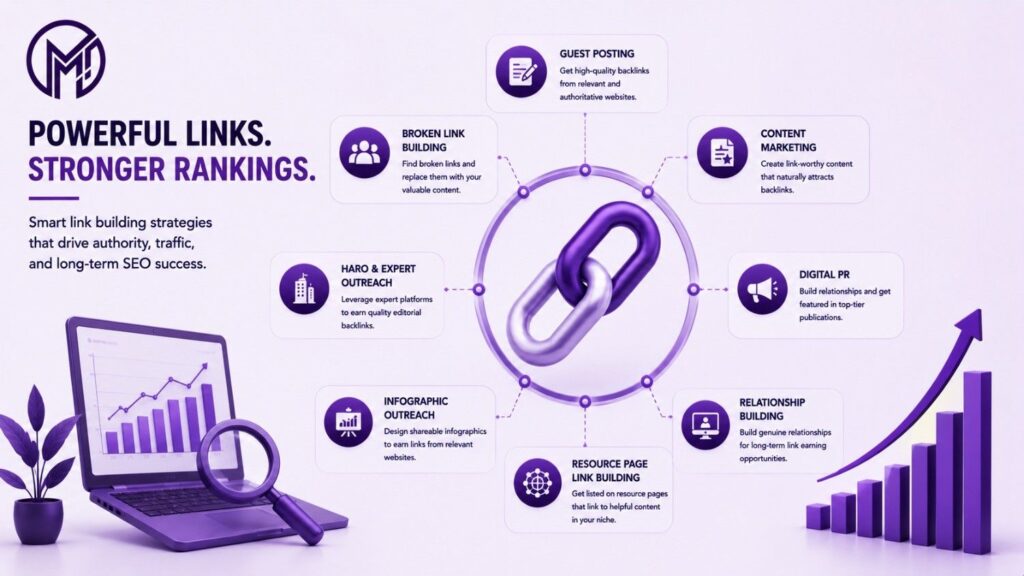
The most effective white hat techniques in 2026 are guest posting on authoritative sites, digital PR and press coverage, broken link building, resource page link building, and creating highly shareable original research or data assets.
These white hat link building techniques consistently outperform black-hat approaches because they build authority that Google rewards rather than penalises — making them the only sustainable foundation for any long-term SEO link building strategy.
Guest posting remains the most scalable white hat link building strategy when executed correctly. The key distinction between effective guest posting and the low-quality version Google penalises is the target: effective guest posting targets genuine, high-traffic publications relevant to your industry where real audiences read the content — not ‘write for us’ directories filled with paid posts that no one reads.
An SEO agency guest posting for a fintech client, for example, would target publications like The Ken, Entrackr, or Mint’s digital section — places where the link carries genuine editorial authority and the content reaches actual decision-makers in the target industry.
Digital PR is the highest-authority link building strategy available. When your business is featured in a news article, research report, or industry roundup published by a respected media outlet, the resulting backlink is the most natural and most algorithmically valuable type that exists.
Leading agencies invest in developing PR-worthy content assets — original surveys, data studies, proprietary research, or expert commentary on trending industry topics — that journalists can cite, quote, and link to. A single link from Economic Times or Business Standard is worth more for domain authority than dozens of guest posts on minor blogs.
Broken link building is another powerful off page SEO strategy that consistently over-delivers relative to its effort requirement. Broken link building is a technique that consistently over-delivers relative to its effort requirement. The process is: find authoritative pages in your client’s niche that link to resources which no longer exist (the linked page returns a 404 error), create or identify a superior replacement resource on your client’s site, and reach out to the linking page’s owner to suggest replacing the broken link with your resource.
This approach works because you are offering genuine value — helping website owners fix a broken experience for their visitors — rather than making a cold pitch for a link. Agencies using tools like Ahrefs or Semrush can identify hundreds of broken link opportunities per niche in minutes.
✔ Best Practice: The quality of your link targets matters infinitely more than quantity in 2026. A focused campaign earning 5 links per month from genuinely authoritative, relevant websites will outperform a volume campaign earning 50 links from weak directories within 6 to 9 months — and will not carry the penalty risk that volume approaches do.
High Authority Backlink Strategies for Long-Term Rankings
High authority backlinks — links from websites with Domain Rating above 60, strong organic traffic, and genuine editorial standards — are the most coveted assets in SEO.
Building a profile of high quality backlinks is the single most reliable predictor of long-term first-page rankings, which is why every link building strategy developed by Mansiidigiverse is specifically engineered to target and earn this class of backlink.
They are also the most difficult to earn, which is precisely why they deliver lasting competitive advantage. Websites that accumulate a profile of high-authority links build a domain strength that competitors cannot quickly replicate, creating a durable ranking moat around their top-performing pages.
The most reliable strategy for earning high authority backlinks is the creation of linkable assets — content so genuinely valuable that authoritative websites naturally want to reference and link to it.
The most link-attractive content formats in 2026 are original research and data studies, comprehensive industry guides that become definitive references, free tools and calculators that provide ongoing utility, expert roundups featuring multiple well-known voices in a field, and contrarian or counterintuitive perspectives on mainstream industry beliefs that generate discussion and citation.
For Indian businesses, publishing original research about Indian market trends fills a genuine gap — most global research does not reflect Indian realities, making locally-focused data assets exceptionally powerful for earning high quality backlinks from Indian media, industry bodies, and peer agencies.
For Indian businesses specifically, publishing original research about Indian market trends, consumer behaviour data, or industry-specific benchmarks fills a genuine gap — most global research does not reflect Indian market realities.
A digital marketing agency that publishes an annual report on ‘Digital Marketing Benchmarks for Indian SMEs’, backed by survey data from 500 respondents, will earn links from Indian media, industry bodies, and peer agencies for years after publication. The one-time investment in research produces recurring link equity.
HARO (Help a Reporter Out) and its Indian equivalents — journalists posting expert query requests on platforms like Twitter/X, LinkedIn, and dedicated PR platforms — allow businesses to earn media links by providing expert commentary on stories being written.
This is one of the most cost-effective backlink strategies for SEO because you are providing value to journalists in exchange for the kind of editorial link that money alone cannot buy. Businesses that build a reputation as reliable expert sources earn high quality backlinks consistently and at scale.
When a journalist at Mint is writing about e-commerce trends and your CEO’s expert quote appears in the article with a link to your website, that is a high-authority backlink earned through expertise rather than outreach. Agencies build systems to monitor and respond to relevant journalist queries daily for their clients.
Link Building Strategy | Difficulty | Link Quality | Timeline to Results | Best For |
Guest Posting (quality) | Medium | Medium–High | 1–3 months | Most businesses |
Digital PR / Press Coverage | High | Very High | 2–6 months | Brands with newsworthy content |
Broken Link Building | Medium | Medium–High | 1–2 months | Resource-heavy niches |
Resource Page Links | Medium | Medium | 1–3 months | Educational, B2B, service sites |
Skyscraper Technique | High | High | 2–4 months | Competitive niches |
Local Citations & Directories | Low | Low–Medium | 1–2 months | Local businesses in India |
Link Reclamation | Low | Medium–High | 2–6 weeks | Established websites |
PBN / Purchased Links | Low (setup) | Negative risk | Short-term only | Not recommended — high penalty risk |
How Do SEO Agencies Build Backlinks Differently Than Beginners?
Professional SEO agencies build backlinks differently from beginners by using systematic prospecting processes, personalised outreach at scale, relationship-based link acquisition, and content assets specifically designed to attract links — rather than submitting to generic directories or purchasing links.
Understanding how SEO agencies build backlinks is crucial if you are evaluating whether to manage link building in-house or partner with a specialist agency like Mansiidigiverse that already has the relationships, tools, and processes in place.
Agencies treat link building as a long-term authority-building programme, not a one-time task.
The most significant difference between how agencies and beginners approach link building is the quality of the target selection process. Beginners typically look for any website willing to accept a guest post or any directory that will list their site.
Agencies use tools like Ahrefs, Semrush, and Majestic to evaluate potential link targets on multiple dimensions simultaneously — Domain Rating, organic traffic volume, relevance to the client’s niche, existing link profile quality, and whether the site has editorial standards that make its links genuinely trusted by Google.
Outreach is the second major differentiator. Beginners send template emails to hundreds of website owners with minimal personalisation — response rates below 2 percent are common.
Agencies invest in research before each outreach contact: understanding the target website’s content focus, finding the specific editor or content manager responsible for the relevant section, personalising the pitch to reference specific content they have published, and making a clear, immediate case for why their client’s resource adds value to the target’s audience.
These advanced SEO link building techniques in outreach execution are what separate agencies that achieve 8–15% response rates from beginners operating below 2% — a difference that translates directly into dramatically more links per hour of effort.
This personalisation raises response rates to 8 to 15 percent for well-executed campaigns — a dramatic difference in output per hour of effort.
Agencies also approach link building as relationship management, not transactional outreach.
A relationship with an editor at a respected Indian industry publication — built through genuine engagement with their content, sharing their articles, offering useful expert commentary, and being a reliable source of quality contributions — yields ongoing link placement opportunities that transactional outreach never produces. The first guest post might take three months to place.
The fifth might take three days. Agencies that invest in building these publishing relationships create durable, compounding link acquisition assets for their clients.
Agency Tactic: Top agencies maintain a ‘link prospect database’ for each client — a curated list of 200 to 500 target websites segmented by acquisition strategy (guest post, broken link, PR pitch, resource page).
This database is continuously updated as new sites are discovered, contacted, and either converted to links or removed. New account managers can pick up existing outreach relationships seamlessly, and no prospect falls through the cracks.
Real Examples of Successful Link Building Campaigns (Case Studies)
Understanding how link building works in practice requires looking at real-world examples of campaigns that delivered measurable SEO results. The following case studies illustrate the application of different link building strategies in Indian and global contexts, demonstrating the business impact of well-executed campaigns.
Case Study 1 — SaaS Company, Original Research Strategy: A Bengaluru-based B2B SaaS company serving Indian HR professionals published an original annual research report titled ‘State of HR Technology Adoption in India 2025’, based on survey responses from 600 HR managers across mid-size and enterprise companies.
The report was distributed via email to HR associations, featured in an ET HRWorld article, and actively pitched to HR industry publications. Over the following 12 months, the report earned 87 editorial backlinks from 43 unique domains, including several DA 60+ Indian business publications.
This case study demonstrates how content-led backlink strategies for SEO can generate compounding returns that far exceed the cost of a single research investment.
The company’s organic traffic grew by 340 percent during this period, and three of their target commercial keywords moved from page 3 to page 1 of Google search results.
Case Study 2 — E-Commerce Brand, Broken Link Building: A Mumbai-based sustainable fashion brand asked their SEO agency to build authority for their sustainability content hub. The agency used Ahrefs to identify 140 broken links on fashion and sustainability websites pointing to discontinued resources about ethical fashion certifications.
They created a comprehensive, up-to-date guide on ethical fashion certifications relevant to the Indian market, then reached out to the 140 website owners. 34 agreed to replace their broken links with the client’s guide — a 24 percent conversion rate that earned 34 backlinks from relevant sites in under 8 weeks. Average Domain Rating of linking sites: 48. Cost: 40 hours of agency time plus content production.
Case Study 3 — Professional Services Firm, HARO + Expert Commentary: A Delhi-based financial advisory firm wanted to build authority for their investment advisory pages without large content production investment. Their agency registered on HARO and set up keyword alerts for finance, investment, and personal wealth queries.
Over 6 months, they responded to 47 journalist queries with expert commentary from the firm’s senior advisors. 19 of these resulted in published articles with backlinks, including placements in Livemint, MoneyControl, and The Hindu BusinessLine — three of India’s highest-authority financial publications. The firm’s domain rating increased from 28 to 47 during this period, and their organic leads from search doubled.
Step-by-Step Process to Build Backlinks Without Spam
To build backlinks without spam, follow this process:
audit your existing backlink profile to identify gaps and opportunities, create a linkable asset that provides genuine value to your target audience, build a targeted prospect list of relevant, authoritative websites, craft personalised outreach that leads with value, follow up persistently but professionally, and track results to refine your approach each month.
This spam-free approach is the backbone of all link building strategies that Mansiidigiverse recommends — because sustainable growth requires earning links that Google trusts, not manufacturing links that Google will eventually discount or penalise.
Building backlinks without spam is fundamentally about earning links through merit rather than manufacturing them through volume or manipulation. This sounds obvious, but it requires a genuine shift in how most businesses and marketers think about link building — from ‘how do I get links’ to ‘why would an authoritative website want to link to my content’.
Answering the second question honestly determines your entire link building strategy.
- Audit your current backlink profile: Use Ahrefs, Semrush, or Google Search Console to see which sites already link to you, which pages on your site have the most backlinks, and whether any existing links are toxic or low-quality enough to disavow. Understanding your starting point prevents wasted effort and identifies link reclamation opportunities — mentions of your brand online that have not been converted to links.This audit also uncovers link reclamation opportunities — brand mentions that can be converted to actual backlinks with a single outreach email, making it one of the highest-ROI starting points in any link building strategy.
- Identify your most linkable existing content: Look at your website’s existing pages and ask which ones provide enough unique value that another website’s editor might genuinely want to reference them. If no such pages exist, content creation becomes your first priority before outreach begins.
- Create or improve your linkable asset: This is the foundation of spam-free link building. Your linkable asset must be genuinely better, more comprehensive, more accurate, or more useful than what currently ranks for the keywords and topics you are targeting.Mediocre content is the most common reason link building strategies fail — no amount of outreach volume compensates for content that simply does not merit a link.Mediocre content earns mediocre links — or no links at all, regardless of outreach volume.
- Build your target prospect list: Use Ahrefs or Semrush to find pages that already link to similar resources (competitors’ link profiles), websites that cover related topics without yet linking to your resource, broken link opportunities in your niche, and resource pages or link roundups that regularly curate relevant content.
- Write personalised outreach emails: Reference something specific about the target website. Explain clearly why your resource adds value to their audience. Make the ask direct and easy to act on. Keep emails concise — under 150 words for the initial contact.
- Follow up once: If no response after 7 to 10 days, send one polite follow-up. Beyond this, further contact becomes spam. Move to the next prospect.
- Track placements and measure impact: Record every link placed in your prospect database with the date, page URL, Domain Rating, and anchor text. Review the impact on target page rankings monthly and use this data to identify which types of links are moving rankings most effectively for your specific competitive landscape.
Best Link Building Tools Recommended by Experts
The right tools make every stage of the link building process faster, more data-driven, and more scalable. Professional SEO agencies invest in a core stack of link building tools that cover prospecting, outreach management, link monitoring, and competitor analysis.
Whether you are implementing link building strategies independently or partnering with an agency, understanding these tools helps you evaluate the quality and rigour of any link building operation.
Here are the tools most consistently recommended by experienced link building specialists.
- Ahrefs: The industry-standard tool for backlink analysis, competitor link profile research, broken link discovery, and content gap identification. The Site Explorer feature allows you to see every link pointing to any website on the internet, which is the foundation of competitive link building research.
- Semrush: Offers strong backlink analytics alongside its comprehensive keyword and SEO toolkit. The Backlink Analytics and Link Building Tool features provide prospect lists, outreach management, and link tracking in one integrated platform — particularly useful for agencies managing multiple clients.
- Majestic: Specialises in backlink metrics with its proprietary Trust Flow and Citation Flow scores, which provide a nuanced view of link quality distinct from Ahrefs’ Domain Rating. Many agencies use Majestic alongside Ahrefs to cross-reference link quality assessments.
- io: A prospecting tool that finds professional email addresses for any domain — essential for outreach at scale. Reduces the time spent finding the right contact at a target publication from 15 minutes to 15 seconds.
- BuzzStream: An outreach relationship management platform that tracks every contact, email, and link placement with each prospect. Prevents duplicate outreach, enables team collaboration on campaigns, and provides analytics on outreach response rates and campaign progress.
- Pitchbox: A more advanced outreach automation platform that integrates with Ahrefs and Semrush to import prospects, automate personalised follow-up sequences, and track campaign metrics. Preferred by agencies running large-scale outreach campaigns.
- Google Search Console: Free and underutilised by many businesses, GSC shows exactly which external websites link to yours, which pages on your site have the most inbound links, and how your backlink growth correlates with ranking changes. An essential baseline tool for any link building campaign.
Free vs Paid Tools: What Should You Choose?
For beginners and small businesses, free tools — Google Search Console, Ahrefs Webmaster Tools (free tier), and Moz Link Explorer (limited free version) — provide enough data to start a basic link building campaign.
For agencies and businesses in competitive niches, paid tools like Ahrefs and Semrush are essential investments — the depth of competitive data they provide directly translates to better prospect targeting and measurably better campaign results.
The best link building tools recommended by SEO agencies are those that give you full visibility into your own backlink profile, your competitors’ link profiles, and the quality of potential link targets — which is why Ahrefs and Semrush remain the dominant paid tools in any professional link building strategy stack.
Tool | Free / Paid | Best For | Approx. Cost (INR/month) | Key Feature |
Google Search Console | Free | All businesses | Free | Your own backlink data + GSC insights |
Ahrefs Webmaster Tools | Free (basic) | Small businesses, starters | Free | Site audit + limited backlink data |
Moz Link Explorer | Free (limited) | Quick competitor checks | Free (10/month) | Domain Authority + spam score |
Ahrefs (paid) | Paid | Agencies, competitive SEO | Rs. 8,000–25,000 | Full backlink database + competitor gaps |
Semrush (paid) | Paid | Full-service SEO agencies | Rs. 9,000–22,000 | Backlinks + SEO + content + PPC in one |
Majestic (paid) | Paid | Link quality analysis | Rs. 4,000–12,000 | Trust Flow + Citation Flow metrics |
Hunter.io (paid) | Freemium | Outreach prospecting | Free–Rs. 4,000 | Email finder for target domains |
BuzzStream (paid) | Paid | Outreach management | Rs. 5,000–15,000 | Relationship tracking + team outreach |
Pro Tip: If budget is limited, start with Google Search Console (free) for your own data, Ahrefs Webmaster Tools (free) for site-level backlink and technical data, and Hunter.io’s free tier for 25 email lookups per month.
This zero-cost stack is sufficient to execute a basic guest posting and broken link campaign. Upgrade to paid tools when monthly revenue from SEO-driven leads justifies the investment.
Link Building Tips for Small Businesses and Beginners
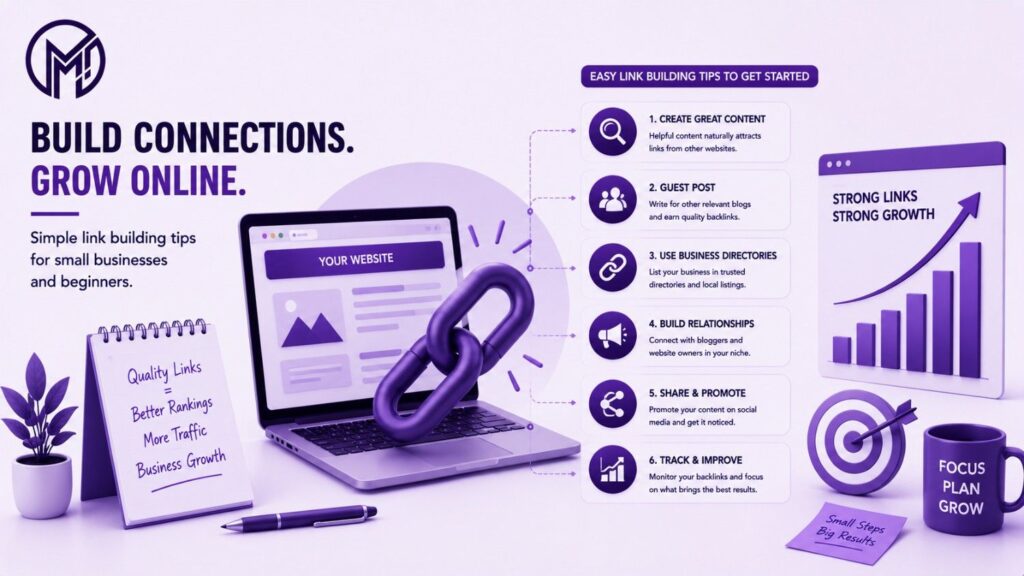
The best link building tips for small businesses are:
start with local citations and directory listings, get listed in relevant industry associations, earn links through local press coverage of your business news or milestones, create genuinely helpful content that answers your customers’ most common questions, and build relationships with complementary non-competing businesses for cross-referral links.
These link building tips for small businesses are practical starting points that require no large budget — just consistency, local relationships, and a genuine commitment to creating content that serves your target audience.
Small businesses and beginners often feel intimidated by link building because the advice they find online is typically written for large brands with dedicated SEO teams and significant content budgets.
The reality is that small businesses have genuine advantages in link building that larger companies lack: authentic local stories, direct access to the business owner for expert commentary, established community relationships, and the agility to participate in local events and news that generate organic coverage.
The starting point for any small business link building effort is the low-hanging fruit: links you can earn without any outreach at all. These include Google Business Profile (which creates a citation that supports local SEO), Justdial, IndiaMART, Sulekha, and other Indian business directories for local services, industry-specific directories relevant to your sector (Tradeindia for manufacturers, Practo for healthcare, Housing.com for real estate), and local chambers of commerce member directories.
None of these off page SEO strategies carry exceptional authority individually, but collectively they establish the foundational citation consistency that local SEO requires and that Google uses as a trust signal for local businesses.
None of these carry exceptional authority individually, but collectively they establish the foundational citation consistency that local SEO requires.
The next tier of small business link building is community-based. Sponsor a local event, support a neighbourhood initiative, or partner with a local educational institution — each of these activities generates genuine local news coverage and organisation website links that carry authentic authority signals.
For a small business in Coimbatore, a link from the Coimbatore District Small Industries Association’s website or from a local Tamil Nadu news portal is far more valuable for local rankings than a generic guest post on a national blog.
Natural Link Building Methods That Google Loves
Natural link building — earning links without any direct outreach or payment — is the gold standard of SEO authority building because it most closely mirrors the organic reputation growth that Google’s algorithms are designed to reward.
Natural link building methods work because they align your SEO strategy with Google’s fundamental goal: surfacing content that is genuinely authoritative, helpful, and trusted by the real websites that cover your industry.
Natural links happen when your content is genuinely valuable enough that other website owners reference it spontaneously, without any prompting from you.
The most reliably natural link-attracting content types are:
comprehensive how-to guides and tutorials that become the go-to reference for a topic in your industry, original data and research that journalists and bloggers cite as a source, free tools, templates, or calculators that provide ongoing utility and get bookmarked and shared widely, opinion pieces and thought leadership content that attract commentary and reference from peers, and news coverage of genuinely newsworthy events — a product launch, a funding round, a significant community initiative, an award or certification.
Building natural links at scale requires distribution strategy alongside content quality. Even excellent content earns few links if no one discovers it. Agencies combine content promotion through social media, email newsletters, industry forums, and community platforms with the quality that makes that content worth linking to.
Applying consistent off page SEO strategies alongside strong on-page content — promoting your best resources through the right channels so they reach the editors and writers most likely to reference them — is how natural link building scales from a handful of links to dozens per month.
Content shared in the right communities — a detailed guide shared in a relevant LinkedIn group, or a data study pitched to newsletter curators in your industry — earns natural links from the community members who find it genuinely useful enough to reference in their own content.
Expert Insight: Unlinked brand mentions are a hidden natural link building goldmine for established businesses.
Use tools like Google Alerts, Mention.com, or Ahrefs Content Explorer to find every time your business name is mentioned online without a link. Contact the author with a simple, friendly note thanking them for the mention and requesting they convert it to a clickable link. Conversion rates for this technique average 15 to 30 percent — making it one of the highest-ROI link building activities for businesses with existing brand recognition.
How to Select a Link Building Agency That Delivers Result
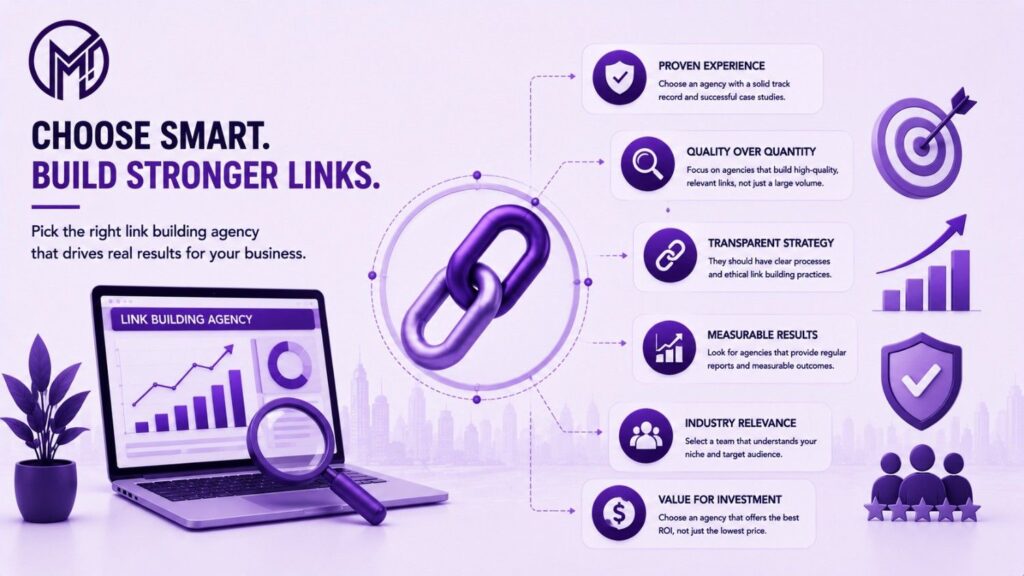
To choose the right link building agency, evaluate them on:
transparency about their link acquisition methods, the quality and relevance of their link placements (ask for samples), their ability to show measurable ranking improvements from previous campaigns, realistic timelines and expectations, and clear reporting on every link built — including the URL, Domain Rating, and anchor text of each placement.
At Mansiidigiverse, we provide full transparency on every link building strategy we execute — our clients see exactly where their links are placed, the domain authority of each linking site, and how each campaign is moving their target keyword rankings month over month.
The link building agency market in India ranges from genuinely skilled SEO professionals delivering measurable results through ethical strategies, to high-volume spam operations selling hundreds of links per month at prices that should immediately raise suspicion. Distinguishing between these two categories before committing to a retainer saves both money and the risk of Google penalties that can take 6 to 18 months to recover from.
Price is the first, roughest filter. High-quality, white-hat link building is labour-intensive — it requires research, content creation, personalised outreach, and relationship management. An agency offering 50 links per month for Rs. 5,000 is not building links through editorial outreach; at that price point, the only way to generate that volume is through automated spam submissions, PBN placements, or link farms.
Reasonable market rates for ethical link building strategies in India in 2026 range from Rs. 15,000 to Rs. 80,000 per month depending on the authority level of target placements, the number of links targeted, and the level of content creation required to earn those links.
These links may temporarily improve rankings for low-competition keywords, but they are algorithmically devalued by Google’s spam detection systems and carry the risk of manual penalties for more competitive queries.
Reasonable market rates for ethical, high-quality link building in India in 2026 range from Rs. 15,000 to Rs. 80,000 per month depending on the number of links targeted, the authority level of target placements, and the level of content creation required. Want to know what a quality link building campaign would look like for your business? Talk to our SEO team today.
Agencies at the higher end of this range are targeting Domain Rating 50+ publications with genuine editorial standards and producing custom content for each placement. Those at the lower end are likely executing a mix of quality guest posts on moderate-authority sites and foundational citation building.
Red Flags to Avoid When Hiring an SEO Agency for Your Business
⚠ Red Flag: They promise guaranteed Google rankings or a specific number of links per month. Quality link building is not a production line. Ethical agencies target specific authority thresholds and relevance criteria — the number of links placed per month varies based on what is genuinely achievable at that quality level.
⚠ Red Flag: They cannot show you sample link placements from previous campaigns. Any reputable link building agency should be able to share anonymised examples — actual URLs of placed guest posts, earned media links, or resource page links — from their client work. Inability or unwillingness to provide samples is a critical red flag.
⚠ Red Flag: They use terms like ‘SEO links’, ‘link packages’, or ‘monthly link subscriptions’ without specifying target domain authority, relevance criteria, or content requirements. These are hallmarks of volume-based, low-quality link building operations.
⚠ Red Flag: They offer links from their own network of websites. Private blog networks — groups of websites controlled by one entity to create the illusion of independent editorial links — are explicitly against Google’s guidelines. Links from PBNs appear natural on the surface but are algorithmically identified and discounted in most cases, and can trigger penalties when detected.
⚠ Red Flag: Their own website has poor Domain Authority, thin content, and few or no organic backlinks. An agency that cannot build authority for its own website is unlikely to do so effectively for yours.
Questions You Must Ask Before Hiring
Asking the right questions during an agency evaluation reveals the quality of their process, the honesty of their communication, and their understanding of what actually drives SEO results. These are the questions every business should ask before signing a link building retainer.
- Can you show me 5 examples of links you have built for clients in the last 6 months, including the URL, Domain Rating, and organic traffic of the linking page?
- What percentage of your links come from genuine editorial guest posts versus automated submissions, directories, or networks you control?
- How do you select target websites for a new client? What criteria do you use to evaluate link quality?
- What does your outreach process look like — are emails personalised for each target, and how do you avoid looking like spam?
- How do you handle link building for clients in regulated industries where certain types of sponsored content disclosure are legally required?
- What happens if Google updates its algorithm and devalues a type of link you have been building? How do you adapt?
- How does your agency measure the ROI of link building strategies, and what reporting will I receive each month on link placements, domain authority growth, and keyword ranking improvements?
- Can you provide a client reference who has given you permission to share their campaign results — someone I can speak to directly about your work?
Future of Link Building Strategies in 2026 and Beyond
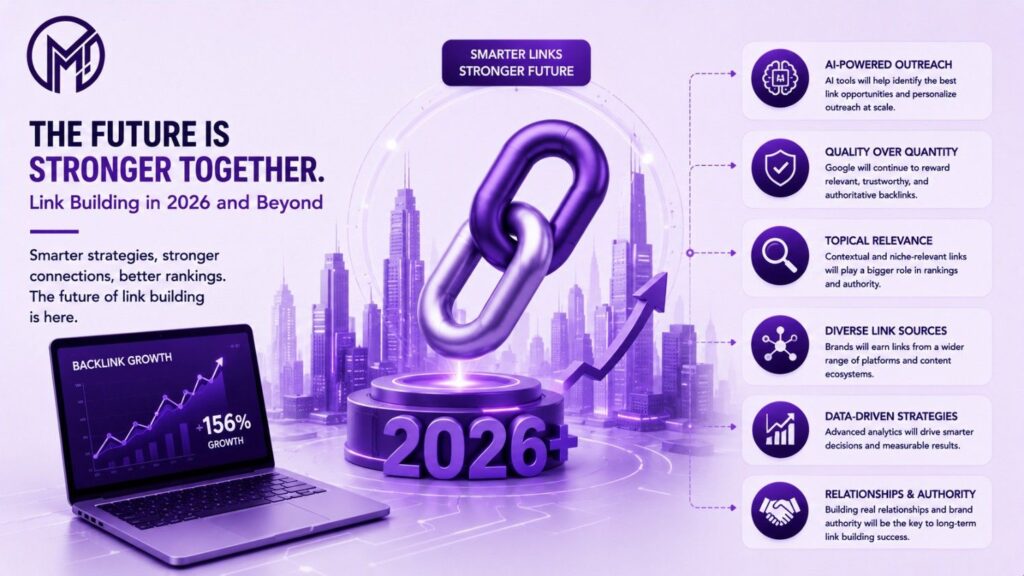
Link building is evolving alongside changes in how search engines understand content, how users discover information, and how AI is reshaping both content creation and search result presentation.
Understanding where link building is heading allows agencies and businesses to position their strategies for long-term relevance rather than optimising for tactics that may become obsolete.
The businesses that invest in legitimate, high-quality link building strategies today are building the domain authority foundation that will make them the dominant sources AI search engines cite tomorrow — creating a compounding return on investment that makes ethical link building one of the most durable bets in digital marketing.
The direction of travel is clear: links that represent genuine editorial endorsement — earned through content quality, expert authority, and authentic relationships — will become more valuable, while links that are manufactured through any systematic manipulation will become progressively less effective as Google’s AI-powered spam detection improves.
This is not a new trend; it is an acceleration of a direction Google has been moving for over a decade. What is new in 2026 is the speed and precision with which algorithmic detection can identify inauthentic link patterns.
How AI Is Changing Link Building and SEO
AI is transforming link building in two distinct directions simultaneously: it is making certain tasks dramatically faster and more scalable, while also raising the bar for what constitutes genuinely valuable, link-worthy content.
Agencies that understand how AI is changing SEO link building techniques — using it to accelerate prospecting and outreach while investing more heavily in genuine expert content that AI cannot replicate — will build stronger, more efficient link building operations than those who use AI only as a content production shortcut.
Agencies that understand both dimensions of this transformation will build stronger, more efficient link building operations. Those that only see AI as a shortcut for producing content at volume will find their results deteriorating as AI-detection systems improve.
On the efficiency side, AI tools are accelerating the prospecting and outreach phases of link building significantly.
AI-powered tools can now analyse thousands of websites in minutes and score them for relevance and authority, generate personalised outreach email drafts based on the target website’s recent content, identify broken link opportunities at scale across entire content niches, and predict which types of content are most likely to earn links based on historical link pattern analysis in a given topic area.
These capabilities allow agencies to run more targeted, higher-volume prospecting campaigns with smaller teams.
On the content side, AI writing tools have made it possible to produce large volumes of text quickly — but they have simultaneously made Google’s content quality bar higher.
In 2026, genuinely link-worthy content is characterised by original data, genuine expert insight, specific industry knowledge that AI cannot fabricate, and a distinctive perspective or voice that reflects real human expertise.
The paradox of AI and link building strategies is this: as AI makes average content cheaper to produce, truly exceptional content — the kind that earns high quality backlinks naturally — becomes more differentiated and more valuable. Human expertise, unique data, and original insight are the new competitive moat in SEO.
The paradox is that as AI makes average content cheaper to produce, truly exceptional content — the kind that earns links naturally — becomes more differentiated and more valuable. Agencies investing in genuine expert-led content creation are widening the quality gap between their work and commodity content.
Will Backlinks Still Matter in the Age of AI Search?
Yes, backlinks will remain important for SEO even as AI search evolves. While AI-powered search engines like Google’s AI Overviews, Perplexity, and Bing Copilot change how results are presented, they still rely on underlying signals of authority and trust to determine which sources to cite.
Backlink strategies for SEO remain critically relevant in the AI search era because AI search engines use the same foundational authority signals — domain trust, editorial link quality, and topical authority — to decide which sources deserve to appear in AI-generated answers.
Backlinks remain one of the most reliable indicators of this authority — a website with strong, relevant backlinks is more likely to be cited by AI search engines than one without.
The nature of how backlinks matter is shifting, however. In traditional SEO, backlinks primarily influence rankings in the blue-link search results.
In AI-powered search, backlinks influence which sources are considered authoritative enough to be cited in AI-generated answers. Websites that AI search engines treat as trusted sources — those with strong domain authority, genuine editorial backlinks from respected publications, and consistent content quality — are far more likely to appear in AI Overviews and AI-generated answers than those without this foundation.
This means that the future of link building is not about getting links to rank in traditional results — it is about earning the kind of domain authority and topical trust that makes AI search engines regard your website as a reliable, citable source.
The strategy for achieving this is identical to best-practice link building: earn genuine editorial links from authoritative, relevant websites, build topical authority through comprehensive, expert content, and maintain the kind of consistent quality that gives AI systems confidence in your website as a trustworthy information source.
Businesses and agencies that build genuine link authority now are simultaneously optimising for traditional Google search, featured snippets, AI Overviews, and AI-native search engines — a compounding return on investment that makes ethical, high-quality link building one of the most durable marketing investments available in the digital landscape of 2026 and beyond.
If you are ready to implement link building strategies that deliver lasting results, Mansiidigiverse offers end-to-end link building services built on white hat techniques, transparent reporting, and a genuine commitment to growing your domain authority through quality over quantity.
About the Author – Mansi Pitroda
Mansi Pitroda is a Digital Marketing Specialist with deep expertise in SEO, AEO, GEO, and SERP optimization strategies. She empowers businesses, students, and professionals with actionable insights into search visibility and AI-driven discovery. Through real-world experience and beginner-friendly content, Mansi helps brands rank higher, reach wider, and grow smarter in today’s evolving digital landscape.
FAQs
Top SEO agencies use digital PR, HARO link building, skyscraper technique, broken link reclamation, niche edits, and data-driven content assets to earn high-authority backlinks. They prioritize editorial links from DR 50+ domains over volume, focusing on topical relevance and anchor text diversity.These link building strategies consistently outperform volume-based approaches because they build the kind of domain authority that compounds over time. Strategic internal linking further amplifies the ranking power of every acquired backlink.
New websites should prioritize local citation building, resource page link acquisition, competitor backlink replication, and strategic guest posting on niche-relevant DA 40+ publications. Creating original research, free tools, and linkable assets naturally attract editorial backlinks.The most effective SEO link building techniques for new sites are those that build foundational authority quickly without triggering spam signals — local citations, niche directories, and high-quality guest posts being the ideal starting combination.HARO responses help earn authority media mentions early. Building foundational links consistently during the first six months accelerates domain authority growth significantly.
Effective link building services for Indian businesses are offered by agencies including iProspect India, Techmagnate, PageTraffic, SEOValley, and
and Mansiidigiverse. Mansiidigiverse specialises in niche-relevant outreach, Indian media placements, and building high quality backlinks from authoritative Indian publications — all backed by transparent monthly reporting and measurable ranking improvements.These firms specialize in niche-relevant outreach, Indian media placements, and multilingual content for regional backlink acquisition. Evaluate agencies by their DA benchmarks, transparency in link reporting, and proven results across competitive Indian market verticals.
Top SEO firms achieve consistent high-quality backlinks through systematized outreach workflows, maintained journalist and editor relationships, proprietary content assets, and digital PR campaigns tied to newsworthy data. They operate dedicated link building teams segmented by outreach, content, and placement verticals. Consistent delivery is driven by CRM-managed prospect pipelines, templated yet personalized pitches, and monthly link velocity targets.
Leading SEO firms differ from freelancers through systematic processes, dedicated outreach teams, proprietary media relationships, and scalable content production. Agencies conduct thorough competitor gap analysis, maintain real-time link tracking dashboards, and ensure strategic anchor text distribution.The fundamental advantage of a specialist agency over a freelancer lies in the depth of their link building strategies — agencies have systems, tools, and relationships that individual practitioners typically cannot match.Freelancers typically operate reactively and lack agency-level domain authority benchmarks, editorial relationships, and the accountability frameworks that protect clients from Google penalties.
Premier digital marketing companies employ unique tactics including broken brand mention reclamation, scholarship link programs, podcast guest appearances for bio links, co-citation campaigns, and interactive data visualization assets. Ego bait content targeting industry influencers earns organic shares and editorial links. Some agencies also leverage proprietary link networks built through years of publisher partnerships and exclusive content syndication agreements.
Case studies on successful link building campaigns are available on agency websites like Ahrefs Blog, Moz Case Studies, Search Engine Journal, Backlinko, and Neil Patel’s resource library. Indian agency websites including Techmagnate and PageTraffic publish sector-specific campaign results. SEMrush Academy and Clutch.co client reviews also document measurable link building outcomes across industries and market segments.
Advanced link acquisition methods beyond guest posting include reactive digital PR tied to trending news, original research publication, podcast guesting for backlinks, product or tool reviews by industry bloggers, and strategic brand partnerships.Link reclamation from unlinked brand mentions, HARO expert contributions, and natural link building methods like creating embeddable infographics also generate consistent, editorially earned authority backlinks.Link reclamation from unlinked brand mentions, HARO expert contributions, and creating embeddable infographics with attribution code also generate consistent, editorially earned authority backlinks.
Professional SEO agencies rely on Ahrefs, Semrush, Moz Pro, Majestic SEO, and Pitchbox for link building and backlink analysis. Hunter.io and NeverBounce streamline outreach email verification. BuzzStream manages large-scale link prospecting campaigns. Google Search Console provides first-party link data. Agencies combining multiple tools gain comprehensive visibility into competitor backlink profiles and uncover high-value acquisition opportunities.
Reputable agencies scale link building without spam by maintaining strict editorial quality standards, targeting only topically relevant websites with real organic traffic, and avoiding private blog networks. They use white-hat outreach templates personalized at scale via tools like Pitchbox. Link velocity is controlled to match natural growth patterns.This approach to scaling link building strategies without spam is the only sustainable path — because Google’s Spam Brain system has made manipulative link building not just ineffective but actively harmful to long-term rankings.Regular disavow audits eliminate toxic backlinks before they trigger algorithmic penalties.